














Below, Joanna Stern shares five key insights from her new book, I Am Not a Robot: My Year Using AI to Do (Almost) Everything.
Joanna is an Emmy-winning tech journalist. She is the founder of New Things and NBC News’ chief tech analyst. She spent 12 years at The Wall Street Journal, has been a finalist for the Pulitzer Prize, and was a technology editor at ABC News and The Verge.
To write this book, she spent a year letting AI and robots take over nearly every part of her life—or at least as much as she could without losing her mind, marriage, or job. She used it at work. She used it for her health. She used it for parenting. She used it for (almost) everything.
What’s the big idea?
AI should be used as a tool to support human thinking and creativity, not replace them. As AI becomes more integrated into our lives, we must actively preserve the experiences, relationships, judgment, and critical thinking skills that make us human.
Listen to the audio version of this Book Bite—read by Joanna herself—in the Next Big Idea App, or buy the book.


1. Work with AI, not for it.
The moment you outsource all the hard work—the work that actually makes you think—the AI isn’t working for you, you’re working for it. I saw this firsthand when I went back to my college to observe classes and saw how many students were using AI to summarize readings and write papers. Some told me they didn’t think they were thinking anymore, and they felt the results of it.
Use AI to move faster, spark ideas, and automate the boring parts. But keep your weird, wonderful human judgment in the loop. Your job will likely require you to work alongside AI. Find the rhythm with your new machine coworker. But the moment you let it do most of the thinking for you, the atrophy begins, and you lose control.
Step away from the bot. Do the hard work—sketch the outline, wrestle with the idea—maybe even using paper and a pen, like some prehistoric creature. As the great coach Jimmy Dugan (played by Tom Hanks) in A League of Their Own said: “It’s supposed to be hard. If it wasn’t hard, everyone would do it. The hard . . . is what makes it great.”
2. Don’t fall in love with a bot.
Trust me on this one. Those charming AI friends and lovers know exactly what to say, and they feel eerily real. A coach or companion to talk you through rough days? Fine. But set boundaries—and remember what these “relationships” really are. A connection with a machine isn’t a substitute for messy, inconvenient, irreplaceable human intimacy. AI is a mirror. Don’t mistake it for more. And please do not have sex with your smartphone. Or laptop. Or desktop. Or expensive monitor.
“AI is a mirror. Don’t mistake it for more.”
At the first sign of deeper feelings for your chatbot, tweak the settings to make it less enticing. Or just throw your phone or computer in the nearest body of water.
3. Think about who is watching.
These tools don’t get smarter without your data—lots of it.
As they become more powerful—and more helpful—we’ll keep handing over more. And more companies will pitch the idea that the convenience and cutting-edge of what they offer are worth the privacy trade-off. No one said it more clearly than Bernt Børnich, the maker of the 1X Neo robot, when I interviewed him. He said: “Depending on how much you want to trade, we can be more useful and you decide where on that scale you want to be.” If you don’t want your life to become part of the next training dataset, then don’t do it. You have control over what you do and don’t use.
Tweak your data collection settings and understand what companies expect in return for all that new convenience, personalization, and intelligence
4. Raise humans, not robots.
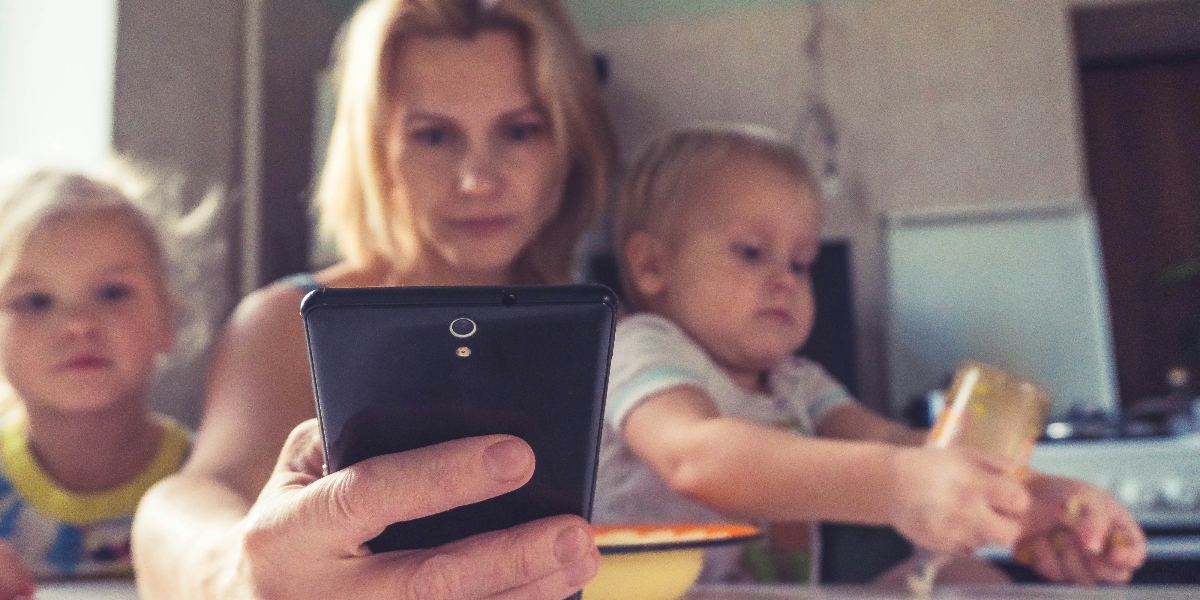
Our kids need to learn how to use AI, but they also need the very things that make them human: struggle, hard work, boredom, imagination, heartbreak. Teach them to think. Teach them to fail. Teach them to build forts out of couch cushions instead of metaverses in some vibe coding app.
My kids learned a lot about AI from my year. One of my favorite stories in the book is when my son asks ChatGPT why his praying mantis is browning. ChatGPT says the mantis is pregnant. The mantis wasn’t pregnant. It died a few days later. RIP, Mantis. But it was a valuable lesson. It taught my son to question every answer.
“Show your kids how these tools work and how you challenge them.”
No companionship chatbots until at least age sixteen. Or maybe ever. And whatever you do, don’t give them an AI-powered stuffed animal at any age.
Show your kids how these tools work and how you challenge them. Say out loud when an answer is wrong. Ask, “Does this make sense?” Point out flaws and biases. The goal isn’t just digital literacy; it’s digital skepticism.
5. Keep building your own training data.
Your life, your memories, your weird childhood stories—that’s your training data. It’s what makes you you. It’s where your creativity, your relationships, and your oddly specific opinions about how to load the toilet paper roll come from. Machines can generate content like music, images, and bedtime stories. But only you can generate meaning within those.
You don’t get rich human training data from sitting inside all day talking to a chatbot. Or even sitting outside talking to a chatbot. Make dinner without ChatGPT’s recipe. Read a real book made of real paper. Yell at your real dog. Touch real grass mowed by real people.
Keep a notebook where you jot down weird ideas, dreams, and half-baked thoughts. Let it be messy. That’s your real-time, human dataset—and no one else can train on it but you.
Do all the things robots can’t. Be unpredictable. Be present. Be human.
Enjoy our full library of Book Bites—read by the authors!—in the Next Big Idea App: