











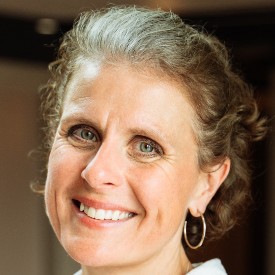
Below, Catherine Carr shares five key insights from her new book, Who’s the Favorite?: The Loving, Messy Realities of Sibling Relationships.
Catherine is the middle of three sisters and hosted a successful podcast about siblings called Relatively, as well as the podcast Talking Politics. A large portion of her career was spent producing BBC Radio 4’s Woman’s Hour and You and Yours. She has also made many documentaries for BBC Radio 4 and BBC World Service.
What’s the big idea?
Sibling relationships are some of the longest and most important in our lives, yet they are deeply misunderstood, under-discussed, and often lack the language we need to navigate their complexity.
Listen to the audio version of this Book Bite—read by Catherine herself—in the Next Big Idea App, or buy the book.

1. Most people know their siblings longer than they’ll ever know anyone else.
Right at the start of the pandemic, I was on the phone with an old colleague who I used to work with in radio. I was talking about my sisters and joked that I should make a podcast about them. She said, “Don’t do that. That would be a bit strange, but maybe you should make a podcast about siblings. Did you know your relationship with them could be the longest of your life?”
I had never heard that idea before, and, seeing as the genes in my family tend toward longevity—my grandma was 99 when she died—that could mean I would know my two sisters, one older and one younger, for around 83 and 87 years, respectively. I sat up like I’d been struck by lightning. After that moment, I couldn’t stop thinking about brothers and sisters. It was as if a filter had been put over my eyes: in every book, every film, every friendship, every relationship, I suddenly saw the sibling dynamics at play, and I became obsessed.
These relationships are unique. They start off vertically due to birth order, but over time, those relationships can move from vertical to horizontal, becoming more peer-like. We can become friends with our siblings. We can stand in the same spot in time and survey the future and the past together. It’s an incredible relationship that evolves so much over those decades from playmates to adults. We might make each other uncles and aunties or give one another brothers- and sisters-in-law. Then, if we get through the midlife crunch, we could get to old age together. Research shows that strong sibling bonds pay off in well-being later in life.
2. We should talk more about sibling bonds.
We simply don’t talk about siblings enough. I’ve heard siblings described as the missing piece of psychoanalysis. The therapists I spoke with said they were heavily trained in parent-child and romantic relationships, but not as much in sibling relationships that turn from vertical to horizontal.
“I’ve heard siblings described as the missing piece of psychoanalysis.”
When people talk about siblings, they get snagged and stuck on birth-order tropes. We joke about the responsible eldest and roll our eyes at the spoiled babies. Maybe there’s a grain of truth in some of that, but we must get beyond that to fully understand these bonds.
My aim is to provide a kind of language to make us more fluent in talking about sibling relationships. We already have a lot in the culture that enables conversations about romantic partners or parents—we have the words. I don’t think we have the words yet for siblings.
3. Why siblings end up in therapy in midlife.
There’s a pattern in sibling relationships that can be compared to the shape of an egg timer. Generally, we grow up in the same house, so we spend a lot of time with them when we’re young. This is the fat bit at the bottom of the egg timer.
In early adulthood or late adolescence, we tend (in the West) to leave home, strike out, search for partners and a job, maybe go to college, find a flat—all those things. We move into different life stages, and it can feel like you’re leaving people behind or being left behind. If you don’t yet have a partner or a job or your own home, you can feel quite far away from those people around you who have moved into those life stages. And that’s quite true with siblings. This phase is that skinny bit in the middle of the egg timer, representing a leaner time for sibling contact.
The fatter bit at the top of the egg timer is when we arrive in middle age, and that’s quite a broad and deep part of life. It lasts a long time. And by that point, we’ve all realized a little bit what life is like. We’ve had some knocks and arrived at the same period together. And it’s around this age that our parents might start to grow frailer, certainly older, and may die. That is the key point at which adult siblings are thrust back into each other’s orbits if they haven’t already sought each other out.
If, in the process of reaching midlife, you and your siblings never moved from a vertical, hierarchical pattern to something more horizontal, like friendship—if those old, often two-dimensional labels haven’t been replaced by a fuller understanding and appreciation of each other as functioning adults—then reconnecting during a time of emotional upset can be difficult. We might fall back into old patterns of relating to one another that aren’t very helpful and may not sustain us through the difficult challenges of finding care homes, caring for our parents ourselves, or deciding what to do with family homes and inheritance. This is a major flashpoint for sibling upset, argument, and estrangement.
“We might fall back into old patterns of relating to one another that aren’t very helpful and may not sustain us through the difficult challenges.”
Even though it’s natural that there’s that skinnier bit in the middle when we’re all going out into the world, I think there’s something in the idea of trying to intentionally make friends with our siblings in adulthood. By laying down good foundations for that crunch in midlife, we might manage those difficult chapters better and emerge as happier older people ourselves as a result.
4. Estrangement is more common than you think.
In 2021, the author Fern Schumer Chapman wrote a book about her estrangement from her brother. She told her publisher she’d like to include the word “estrangement” in the title, and they told her, “Don’t do that. Nobody knows what that means.” Here we are in 2026, and we’ve seen some really public, very sad stories of estrangement play out in the media: the Beckhams, the Murdochs, and the British royal family.
I think we do know what that word means now, but did you know that 28 percent of siblings go through a period of estrangement? And it’s not binary. It’s not “cut off,” as perhaps unhelpfully discussed on social media. It’s more of a moving in and out of intimacy over time.
It’s important to think about estrangement because, for all I’ve said about the goal of making friends and becoming equals with your brothers and sisters, I don’t believe we should feel obligated to be anything in particular to them. That expectation—reflected in foundational stories like Cain and Abel, as well as in morality tales and nursery rhymes across cultures—can be harmful. If we internalize the idea of what we ought to be to our siblings, we may feel unable to acknowledge or complain when those relationships are hurtful, even violent or deeply upsetting. That, I think, is damaging. And because we don’t talk about sibling relationships enough, we rarely confront these realities.
We don’t talk about sibling violence. We don’t talk about what it’s like when those relationships break down, or how it feels to sit on a distant branch of the family tree—aware that you’re still connected to this person, yet lacking the language to articulate that connection. Maybe you don’t even feel able to talk about it with others because it has been largely taboo until recently.
Estrangement also gets to the heart of the sibling experience and the paradox of a “shared childhood,” which, in many ways, isn’t really shared at all. Although we often spend a lot of time physically together in the same home, our experiences of growing up are totally different, and our memories of that time are different. There are so many variables that no childhood can be the same as another’s, even if siblings are born to the same parents and live in the same place. Your parents will be older or younger than they were when your sibling was born. They might be richer or poorer. You might have lost a grandparent or gained a family pet. You might be at a different school than your siblings. You may have moved countries. Your personality may bring out different aspects of your parents’ personalities.
“If we internalize the idea of what we ought to be to our siblings, we may feel unable to acknowledge or complain when those relationships are hurtful.”
When we talk about childhood memories, the variability between siblings’ experiences becomes clear. The way we lay down, store, and recollect memories has so much to do with what we were feeling when the event happened. You might have gone to the coast with your older brother, and that is why you are terrified of the sea, because you remember those wild waves that threatened to sweep you off the beach. But your older brother loves the sea, and when he thinks about that day spent together, he doesn’t remember anything about the rough waves at all. The reason for the difference in experience could be as simple as the fact that you were two and he was six. The waves were big to you and very small to him. This example is small, but it applies to almost everything about our childhood.
Sibling perspectives will never be the same. As adults, if we want to make friends with our siblings, part of that process is accepting that each child of a family will have a different set of feelings tightly wound around memories of the same times. Memories aren’t like DVDs. So, if you talk about your shared memories and your different memories with your brothers and sisters, then you must respect everybody else’s memories and maybe accept a messy collage of your childhoods. Who’s to say which bits are true? The key is that you can agree on the compromise.
5. Sibling bereavement.
Siblings who lose a brother or sister are often called the forgotten mourners. They’re asked to support everyone else through their loss and are rarely given attention to how the experience affects them. If parents lose one of their children, that’s a loss that we recognize as titanic. Similarly, if a child loses a parent, we recognize how incredibly difficult that is. But we don’t talk enough about a sibling losing somebody with whom they have shared their entire history.
However imperfectly, siblings remember each other’s roles in the family story. Your sibling is your best chance to travel back in time to those family holidays, sitting in the back car seat with your brother or sister on the way to grandma’s house. That history your sibling can help you keep is lost when they die.
“Your sibling is your best chance to travel back in time to those family holidays, sitting in the back car seat with your brother or sister on the way to grandma’s house.”
We often take our siblings for granted because we know they might be with us for those 70, 80, 90 years. And because they’re blood, we almost assume that they are not going anywhere. When they do go, that creates a very complicated kind of grief.
I end by talking about bereavement because I think unless and until we’ve talked about all the other aspects of our sibling relationship—from birth order through the idea of labels and roles that we might assume in the family, to memories, to being friends—until we’ve done all of that, we can’t really appreciate the enormity of what it might be to lose a sibling.
Enjoy our full library of Book Bites—read by the authors!—in the Next Big Idea App: